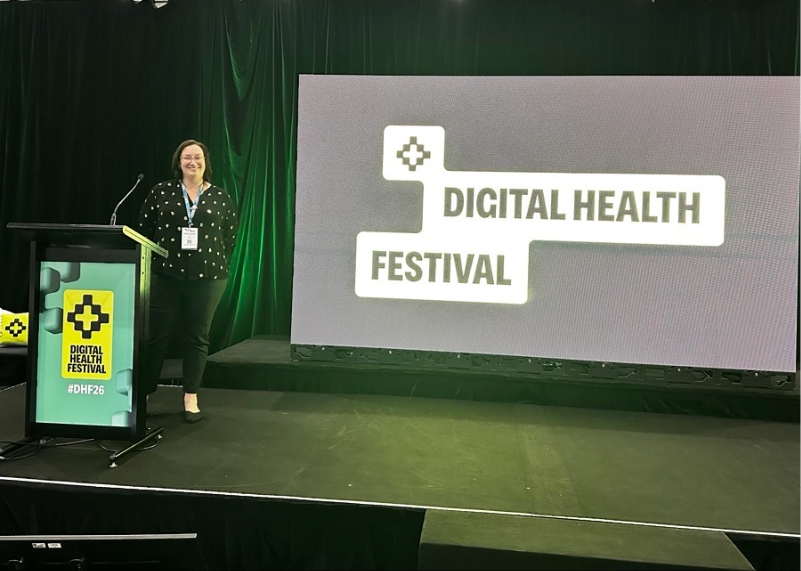
 Kathleen Watson, General Manager at HPA, took the stage at DHF 2026 to explore the growing impact of telesitting in healthcare. Kathleen shared insights into how virtual patient observation models are transforming clinical workflows, helping reduce patient risk, support overstretched care teams, and uphold patient dignity through innovative, technology-enabled care solutions.
When Privacy Leaves People Unseen: Rethinking Dementia Care with AI
A reflection on visibility, safety, and the role of technology in aged care
This conversation didn’t start with technology.
It started with a beloved mother.
She was living with dementia in a residential aged care facility, a specialist dementia ward, thoughtfully designed with privacy and dignity at its core. Sixteen individual rooms. Each a private space, intended to offer comfort and respect.
One evening, arriving for a visit at around 5:30pm, her family expected to find her finishing dinner. Instead, she had already been put to bed where she would remain until morning. Nearly twelve hours.
For someone without cognitive impairment, that might seem unremarkable. But for someone living with dementia, that room could be confusing, even frightening. The crash mats placed there to keep her safe often added to that fear rather than easing it.
What stayed with her family most wasn’t the early bedtime. It was the realisation that for long stretches overnight, she was essentially alone and unobserved.
In her final weeks, she began experiencing seizures. Some were witnessed. Others were not, the ones that happened overnight, in her room, in the quiet hours when no one was watching.
The morning she was admitted to hospital, she was unresponsive. It is likely she had experienced multiple seizures without intervention.
That moment changed everything about how we think about care.
This Is Not a Rare Story
Across Australia, this experience is being repeated quietly, consistently, and largely out of sight.
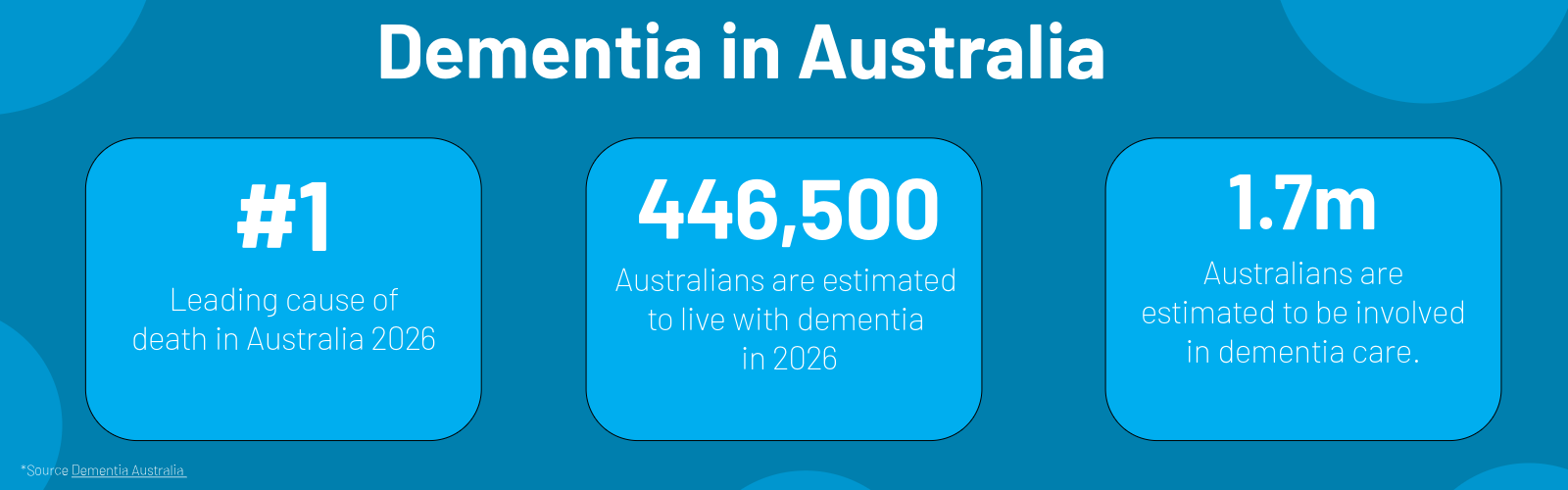
- Nearly 450,000 Australians are currently living with dementia
- Over 130,000 reside in residential aged care
- More than half of all aged care residents have a dementia diagnosis
This is not a niche issue. It is one of the defining healthcare challenges of our time and it is happening in facilities across every state and territory, every day.
Aged care is also operating under significant and sustained pressure. Australia has approximately 224,000 residential aged care places, and dementia care is taking place across all of them mostly in standard rooms, not specialist dementia environments.
Overnight, staffing reduces considerably. It is not uncommon for a single carer to be responsible for 25 to 30 residents, with one nurse covering an entire facility.
This creates a reality that is simple, but important:
The longest period of time that residents are alone coincides with the lowest level of supervision.
We Measure Care in Minutes, But Not in Moments
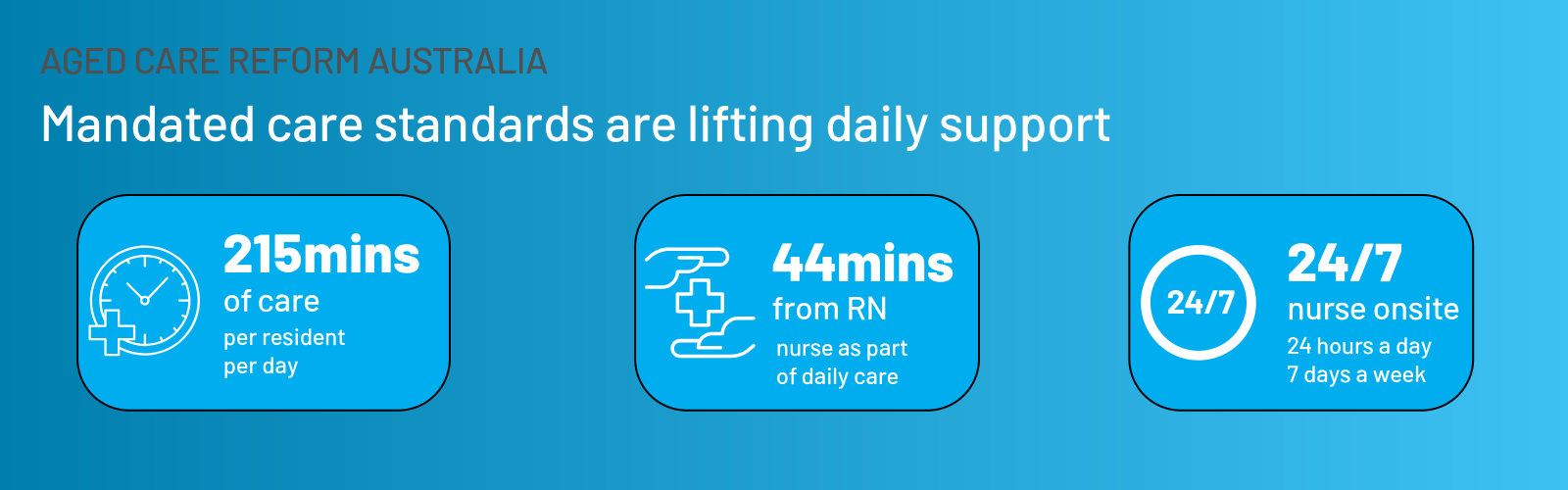
Australia has made meaningful regulatory progress in recent years. Current mandated care standards include:
- 215 minutes of care per resident per day
- Including 44 minutes from a registered nurse
- With a nurse onsite 24 hours a day, 7 days a week
The National Dementia Action Plan further reinforces commitments to dignity, safety, and human rights in care settings.
These are important steps forward. But there is a gap worth examining.
Care is measured as a total across 24 hours averaged, aggregated, and reported. What those figures cannot tell us is when care happens, who is seen and when, or who may go unseen during the most vulnerable hours of the night.
We have built a system that counts care. But counting is not the same as knowing.
Rethinking What Privacy Really Means
In aged care settings, privacy is often interpreted as being left alone particularly in private rooms, particularly overnight. That interpretation comes from a good place. It reflects a genuine commitment to dignity and autonomy.
But for people living with dementia, that definition can fall short.
Privacy should not simply mean not being observed. For this population, true privacy, true dignity, also means:
- Being protected from harm
- Being supported when distressed
- Not disappearing from visibility at the moments that matter most
Absence of observation is not the same as dignity. And being unseen is not the same as being respected.
Where AI Has a Meaningful Role to Play
This is where technology and specifically artificial intelligence, enters the conversation. Not as surveillance. Not as a replacement for skilled, compassionate care. But as intelligent visibility.
Traditional telesitting models rely on continuous human observation someone watching screens, often through the night. That approach is neither scalable nor sustainable, and it does not reflect the future of care delivery.
AI enables a fundamentally different model.
Rather than watching constantly, AI can learn what normal looks like for an individual resident:
- How often they typically move
- When they usually wake
- How they behave through the night
From that baseline, it can detect when something changes a resident not moving when movement is expected, an unusual behavioural pattern, or a prolonged period without any interaction.
Rather than continuous monitoring, the system simply alerts: “Something here doesn’t look right.”
That is not surveillance. That is intelligent awareness and it is a meaningful distinction.
Aligning Three Things We’ve Struggled to Balance
AI will not replace care. It cannot replicate the human presence, the relationship, the touch that defines quality aged care. But it can help ensure that care happens when it matters most, and it offers a genuine opportunity to bring into alignment three things the sector has long struggled to reconcile:
Privacy. Safety. Workforce reality.
For healthcare professionals working in aged care, this technology is not a threat to the care model. It is a support for it, a way to extend the reach of a skilled but stretched workforce, and to ensure that the people in their care are never truly invisible.
Being Seen at the Right Moment
When reflecting on the story that opened this piece, the question is not whether that woman needed more privacy.
The question is whether she needed to be seen, at the right moment.
We have built a system that works hard to protect people from being observed without consent. That instinct is right and important. But in doing so, we have sometimes created conditions where people can go unseen when they are most vulnerable.
That is the balance we now have the opportunity and the responsibility to rethink.
If you would like to explore how AI-enabled care monitoring can support your facility or care team, we welcome the conversation.